Ten Surprising Things About the History of Photography in Canada
What did Canadians know about photography, and when did they know it? Some years ago, I set out to answer that two-part question. My first surprise was the tenor of the discussion as news of the inventions began to circulate in 1839. Photography seemed to be anticipated in British North America and taken up as fit for purpose. Its lengthening chain of improvements matched the colonial will to progress—a forward-looking momentum continuously and locally reframed.
Reading the territory through that lens changes the terms of the investigation. The technology question—how—becomes a lot less interesting than detective fiction’s why—the motive and opportunity that produced a photograph. Who wanted it? Even the most speculative endeavour has an imagined end-user. What problems might photography solve? The why question widens the field of participation, leading us to rethink subjecthood in photographic themes we take for granted: people, places, events, and objects. The why question has staying power because it has been asked and re-asked every time the photograph has moved house. Why keep it?—a question all too frequently answered by carrying the mute excess to the curb.
My three-volume answer to the initial question is a narrative shot through with counter-narrative. Point by counterpoint, it plots a through line of photographic activity on these lands and waters. This introductory lecture will draw on all three volumes as a sharing of discoveries and demonstration of methodology—browsing, with a view to the particulars.
This event is open to the general public and does not require registration (but please note that our seating is limited). The lecture will be followed by a reception in the Piano Lounge, Graham House.
This visit and lecture have been co-organized with Art History, Visual Art and Theory, UBC, and Concordia University's Speaking of Photography series, with thanks to Robert Graham.
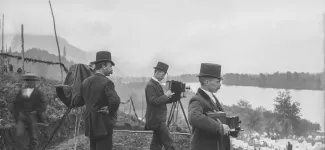
Above photograph: Detail from Ernest Brown, William Hansom Boorne, Ernest G. May, and Charles W. Mathers, Mission, BC, 1892. Photographic negative. Provincial Archives of Alberta, PR0043.B993.
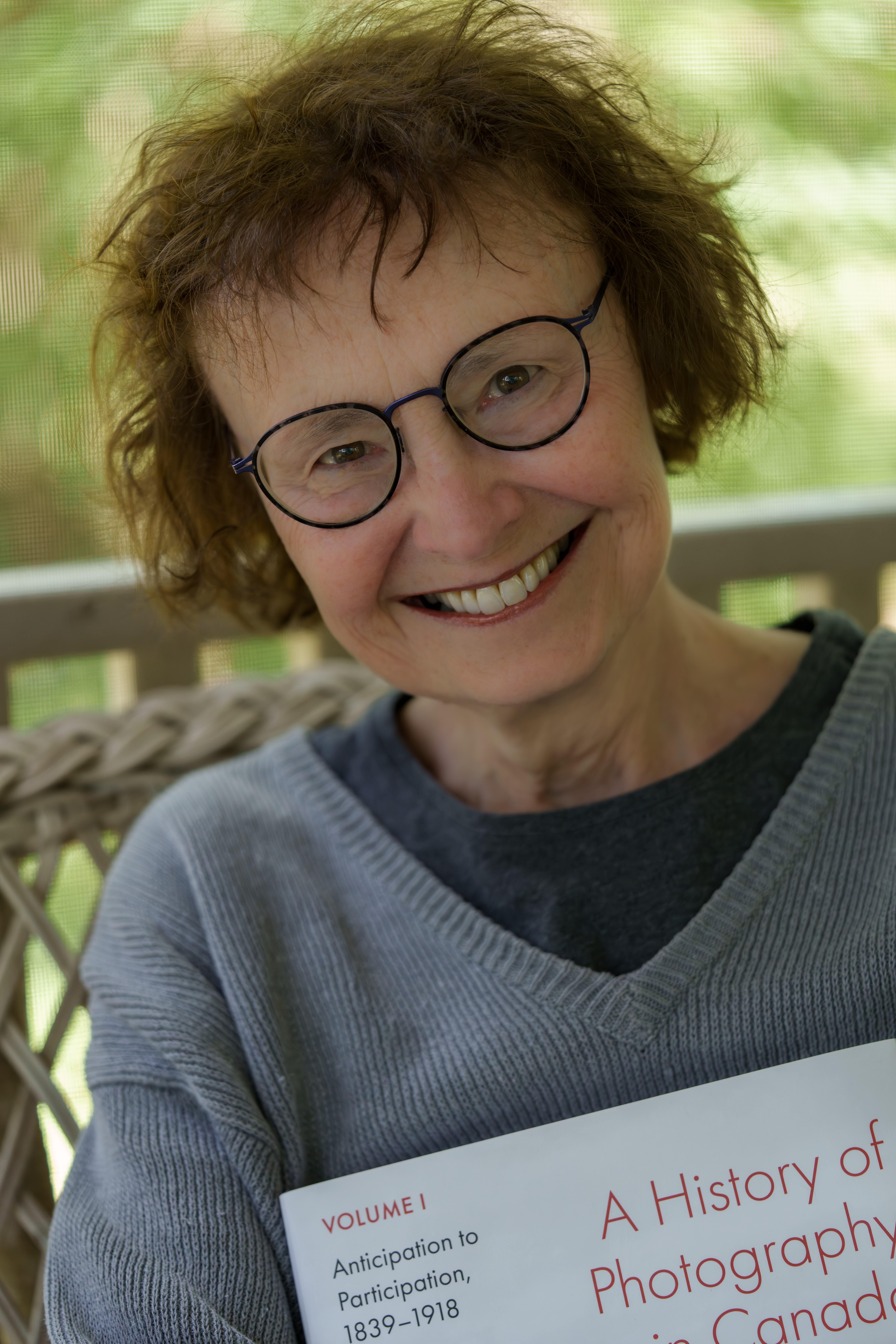 Dr Martha Langford FRSC is a distinguished professor emerita of Concordia University in Montreal. She is the former Research Chair and Director of the Gail and Stephen A Jarislowsky Institute for Studies in Canadian Art. In prior lives, she was the founding director of the Canadian Museum of Contemporary Photography, an affiliate of the National Gallery of Canada, and before that, Executive Producer of the Still Photography Division of the National Film Board of Canada.
She has published numerous monographs, edited collections, catalogues, book chapters, and articles on photography history and theory, and organized photographic exhibitions for museums and festivals in Canada, the UK, and Europe. The first of three volumes, A History of Photography in Canada: Anticipation to Participation, 1839-1918, has just appeared from McGill-Queen’s University Press. In process are Volume 2: A Medium Unleashed, 1919-1969 and Volume 3: Momentous Indecision, 1970-2010.
Dr Langford is in residence at Green College for a week in November 2025.
November 13, 2025
5:00 pm to 6:30 pm
Coach House
6201 Cecil Green Park Rd